

Economic Research Forum (ERF)

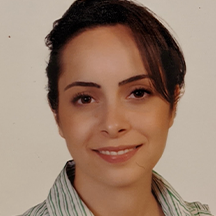
Diana Bashur

Author

Diana Bashur
Secretary, Basic Income Earth Network (BIEN) and PhD candidate, University of Vienna

After working for the UN and other international agencies in development and political analysis in New York, Vienna and Damascus, Diana returned to university to research a different approach to peacebuilding. Currently a PhD candidate at the University of Vienna, she is looking into basic income as a tool for peacebuilding with a focus on the Middle East and a particular interest in its potential for social cohesion. She is also Secretary of the Basic Income Earth Network (https://basicincome.org/executive-committee/), an international charity aimed at promoting an informed discussion about Basic Income.

Content by this Author

What would a basic income mean for the Arab world?

The idea of a regular, unconditional and individual cash payment distributed to all citizens is gaining ground. This column argues that such a basic income would ensure that everyone is able to meet their basic needs unconditionally, thereby improving people’s resilience and solidifying communities. Ultimately, a basic income could help to rebuild the social contract in the Arab world where governments would uphold human dignity by awarding citizens economic security as a right.

Most read

The political economy of stalled structural reforms in MENA

There is a persistent pattern to the structural reforms that are required to underpin economic progress in the countries of the Middle East and North Africa: ambitious strategies are announced and partially implemented, but ultimately they are diluted or reversed. This column argues that the repeated stalling of reform is not primarily a failure of economic design. Rather, it reflects deep-seated political economy constraints rooted in rent dependence, elite bargaining and weak institutional credibility. Without addressing these underlying dynamics, reform efforts are likely to remain symbolic rather than transformative.

Untapped talent, unrealised growth: jobs and women in the MENAAP region

Only around one in five women of working age participate in the labour markets of the Middle East, North Africa, Afghanistan and Pakistan. As this column explains, the region can no longer afford to leave half its human capital underused. Expanding women’s labour force participation is central to growth and resilience in the face of looming demographic change.

Closing the gender gap in political participation in MENA

Women across the Middle East and North Africa participate less than men in politics – not only in political parties and elections, but also in petitions, boycotts, protests and strikes. This column reports evidence from ten countries showing that differences in education, employment and political attitudes explain part of this disparity, yet a significant gender gap remains.

Labour demand and informal employment in Egypt’s manufacturing sector

Egypt’s manufacturing sector faces a dual challenge of weak job creation and persistent informality. Drawing on survey evidence on business behaviour and labour market dynamics, this column explains why job creation is limited and informal work remains such an integral part of how firms organise production. The generation of more formal jobs requires a comprehensive policy approach, one that goes beyond enforcement of labour regulations to reshape the economic environment in which firms and workers make decisions.


Linkedin