

Economic Research Forum (ERF)

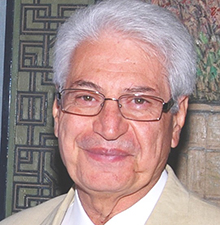
Atif Kubursi

Author

Atif Kubursi
Professor, McMaster University

Atif Kubursi is Professor Emeritus of Economics at McMaster University. He is also President of Econometric Research Limited. In 1982, he joined the United Nations Industrial Organization as Senior Development Officer. Since then he worked as a team leader of several UNIDO missions to Indonesia, Thailand, Saudi Arabia, Kuwait, Sudan, and Egypt. In 2006 he was appointed Executive Secretary of the United Nations Economic and Social Commission for Western Asia (UN-ESCWA). He has published extensively in the areas of macroeconomics, economic development strategies, international trade, impact analysis and regional planning with special emphasis on the environment, tourism and industrial development. He has frequently lectured on globalization issues, economic development, oil and industrialization, impact of tourism on provincial and local economies, political economy of development, Arab affairs and on environment-economy linkages.He has published 10 books and over 250 journal articles and technical reports. Dr. Kubursi also taught economics at Purdue University in Indiana, USA, was a senior visiting scholar at Cambridge University, UK., and lectured and consulted at Harvard. As a professor of economics who has studied international trade for the last 40 years, what Canada is facing today with respect to renegotiating NAFTA is not surprising but certainly represents a stark contrast with the past record of the American/Canadian trade relationship.

Content by this Author

The green energy transition: employment pathways for MENA

The potential employment impacts of green and renewable energy in the Middle East and North Africa are multifaceted and promising. As this column explains, embracing renewable energy technologies presents an opportunity for the region to diversify its economy, mitigate the possible negative impacts of digitalisation on existing jobs, reduce its carbon footprint and create significant levels of employment across a variety of sectors. Green energy is not just an environmental imperative but an economic necessity.

MENA’s transition to renewable energy: a new development strategy

How can countries in the Middle East and North Africa capitalise on the transition to renewable energy to foster a sustainable, productive and inclusive economy? This column, which draws on the development strategy advice of Oxford economist Paul Collier, calls for a nexus approach to skill development, finance, research and education – one that takes inspiration from the economic structures in the successful cities of East Asia, Europe and North America.

Towards a productive, inclusive and green economy in MENA

Decarbonisation of the global economy is a huge opportunity for countries in the Middle East and North Africa. As this column explains, they can supercharge their development by breaking into fast-growing industries that will help the world to reduce its emissions and reach net zero, as well as offering greater employment opportunities and new export lines. Micro, small and medium enterprises in the region can lead the transition to a cleaner and sustainable future, but this may require the formation of clusters of firms that overcome some of the constraints that their limited size could involve.

More jobs, better jobs and inclusive jobs: the promise of renewable energy

Among the many economic and environmental challenges facing the countries of the Middle East and North Africa (MENA), two stand out: the need for jobs and the need to combat the threat of climate change by moving away from reliance on fossil fuels. As this column explains, embracing renewable energy technologies presents an opportunity for the region to diversify its economy, mitigate the possible negative impacts of digital technologies on existing jobs, reduce its carbon footprint and create significant levels of employment, particularly for women and the youth, across a variety of sectors.

Green hydrogen production and exports: could MENA countries lead the way?

The Arab region stands at the threshold of a transformative opportunity to become a global leader in green hydrogen production and exports. But as this column explains, achieving this potential will require substantial investments, robust policy frameworks and a commitment to technological innovation.

Climate change threats and how the Arab countries should respond

The Arab region is highly vulnerable to extreme events caused by climate change. This column outlines the threats and explores what can be done to ward off disaster, not least moving away from the extraction of fossil fuels and taking advantage of the opportunities in renewable energy generation. This would both mitigate the potential for further environmental damage and act as a catalyst for more and better jobs, higher incomes and improved social outcomes.

Most read

Beyond job creation: how can Egypt’s gender gap in work be closed?

More than 2 million jobs are needed each year to absorb new entrants into Egypt’s labour market and raise the country’s employment rate. The job challenge is even more acute for women, whose labour force participation remains low despite recent gains in education. This column reports on the second Development Dialogue, an ERF–World Bank Group joint initiative, which brought together students, scholars, policy-makers and private sector leaders at the American University in Cairo to consider how the country’s gender gap in work can be closed.

Digitalisation, global value chains and regional integration in MENA & SSA

Participation in global value chains is vital for countries pursuing structural transformation and inclusive economic development. This column summarises new evidence on how much production processes have been globalised in Africa and the Middle East relative to other regions; whether this process has taken place with partners within or outside the region; and whether it has taken place more in manufacturing or services.

How trade policy can reduce MENA’s cereal import vulnerability

Heavy dependence on imported cereals, combined with climate change, water scarcity and geopolitical uncertainty, continues to threaten food resilience across MENA. This column explains how an inclusive trade policy can play a key role in making the region’s food security less vulnerable to shocks.

The political economy of algorithms in the Middle East

The Middle East is entering a new political-economic era – one in which algorithms, data and artificial intelligence may become as strategically important as oil once was. Across the region, governments are investing heavily in digital infrastructure, smart governance and AI-driven economic transformation. This column outlines how AI and algorithmic governance are reshaping power, inequality and state capacity in the region.

The risks of a two-speed AI economy in MENA

Much of the debate about artificial intelligence in the Middle East and North Africa focuses on how many jobs it will replace. As this column explains, the more important challenge is that the new technology is likely to create a two-speed labour market, where countries with the capacity to invest in digital infrastructure and skills move rapidly ahead while others struggle to keep pace. Unless governments combine credible national reforms with targeted regional cooperation, AI could widen, not reduce, the economic divides across MENA.

From mega-investment to mega-productivity: closing MENA’s conversion gap

Across the Middle East and North Africa, governments are investing heavily in infrastructure, technology, diversification and new industries. Yet capital accumulation alone does not guarantee productivity growth. As this column argues, the region’s deeper challenge is its ‘investment-to-productivity conversion gap’: ensuring that large-scale investment translates consistently into stronger firms, technological diffusion, skills and better jobs. A different metric of success is required: not how much capital is deployed, but how much productive capability that capital leaves behind.

Sanctions and conflict: why corruption changes the equation

Why do sanctions produce such different political outcomes across the countries that have been targeted? This column reports research examining the role of pre-existing corruption in shaping the relationship between sanctions and subsequent conflict or political instability. The evidence indicates that trade sanctions are associated with higher conflict-related deaths where pre-existing corruption is high.

Why energy efficiency still struggles to attract finance in Egypt

Egypt has reduced energy subsidies and gradually adjusted domestic energy prices toward cost-recovery levels, improving the economic case for energy efficiency investments – but financing has not kept pace. Drawing on structured interviews with banks, developers and public officials, this column traces why energy efficiency projects in the country still struggle to attract capital, and sets out how a ‘financing ladder’ used elsewhere – from revolving funds to risk guarantees to green bonds – could close the gap.

The weak bread chain: cereal supply risks in six MENA economies

The Middle East and North Africa is one of the most food-import-dependent regions of the world, particularly for staple cereals such as barley, maize and wheat, and particularly in six countries – Algeria, Egypt, Jordan, Lebanon, Morocco and Tunisia. As this column reports, diversifying import sources has become an essential strategy for strengthening food security and improving resilience to geopolitical and climate-related disruptions.


Linkedin