

Economic Research Forum (ERF)

Atif Kubursi

Author

Atif Kubursi
Professor, McMaster University

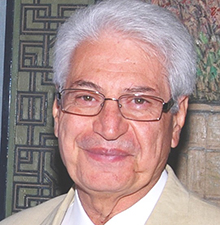
Atif Kubursi is Professor Emeritus of Economics at McMaster University. He is also President of Econometric Research Limited. In 1982, he joined the United Nations Industrial Organization as Senior Development Officer. Since then he worked as a team leader of several UNIDO missions to Indonesia, Thailand, Saudi Arabia, Kuwait, Sudan, and Egypt. In 2006 he was appointed Executive Secretary of the United Nations Economic and Social Commission for Western Asia (UN-ESCWA). He has published extensively in the areas of macroeconomics, economic development strategies, international trade, impact analysis and regional planning with special emphasis on the environment, tourism and industrial development. He has frequently lectured on globalization issues, economic development, oil and industrialization, impact of tourism on provincial and local economies, political economy of development, Arab affairs and on environment-economy linkages.He has published 10 books and over 250 journal articles and technical reports. Dr. Kubursi also taught economics at Purdue University in Indiana, USA, was a senior visiting scholar at Cambridge University, UK., and lectured and consulted at Harvard. As a professor of economics who has studied international trade for the last 40 years, what Canada is facing today with respect to renegotiating NAFTA is not surprising but certainly represents a stark contrast with the past record of the American/Canadian trade relationship.

Content by this Author

The green energy transition: employment pathways for MENA

The potential employment impacts of green and renewable energy in the Middle East and North Africa are multifaceted and promising. As this column explains, embracing renewable energy technologies presents an opportunity for the region to diversify its economy, mitigate the possible negative impacts of digitalisation on existing jobs, reduce its carbon footprint and create significant levels of employment across a variety of sectors. Green energy is not just an environmental imperative but an economic necessity.

MENA’s transition to renewable energy: a new development strategy

How can countries in the Middle East and North Africa capitalise on the transition to renewable energy to foster a sustainable, productive and inclusive economy? This column, which draws on the development strategy advice of Oxford economist Paul Collier, calls for a nexus approach to skill development, finance, research and education – one that takes inspiration from the economic structures in the successful cities of East Asia, Europe and North America.

Towards a productive, inclusive and green economy in MENA

Decarbonisation of the global economy is a huge opportunity for countries in the Middle East and North Africa. As this column explains, they can supercharge their development by breaking into fast-growing industries that will help the world to reduce its emissions and reach net zero, as well as offering greater employment opportunities and new export lines. Micro, small and medium enterprises in the region can lead the transition to a cleaner and sustainable future, but this may require the formation of clusters of firms that overcome some of the constraints that their limited size could involve.

More jobs, better jobs and inclusive jobs: the promise of renewable energy

Among the many economic and environmental challenges facing the countries of the Middle East and North Africa (MENA), two stand out: the need for jobs and the need to combat the threat of climate change by moving away from reliance on fossil fuels. As this column explains, embracing renewable energy technologies presents an opportunity for the region to diversify its economy, mitigate the possible negative impacts of digital technologies on existing jobs, reduce its carbon footprint and create significant levels of employment, particularly for women and the youth, across a variety of sectors.

Green hydrogen production and exports: could MENA countries lead the way?

The Arab region stands at the threshold of a transformative opportunity to become a global leader in green hydrogen production and exports. But as this column explains, achieving this potential will require substantial investments, robust policy frameworks and a commitment to technological innovation.

Climate change threats and how the Arab countries should respond

The Arab region is highly vulnerable to extreme events caused by climate change. This column outlines the threats and explores what can be done to ward off disaster, not least moving away from the extraction of fossil fuels and taking advantage of the opportunities in renewable energy generation. This would both mitigate the potential for further environmental damage and act as a catalyst for more and better jobs, higher incomes and improved social outcomes.

Most read

Sanctions and the shrinking size of Iran’s middle class

International sanctions imposed on Iran from 2012 have reduced the size of the country’s middle class, according to new research summarised in this column. The findings highlight the profound social consequences of economic pressure, not least given the crucial role of that segment of society for national innovation, growth and stability. The study underscores the need for policies to safeguard the civilian population in countries targeted by sanctions.

Artificial intelligence and the renewable energy transition in MENA

Artificial intelligence has the potential to bridge the gap between abundant natural resources and the pressing need for reliable, sustainable power in the Middle East and North Africa. This column outlines the constraints and proposes policies that can address the challenges of variability of renewable resources and stress on power grids, and support the transformation of ‘sunlight’ to ‘smart power’.

Green jobs for MENA in the age of AI: crafting a sustainable labour market

Arab economies face a dual transformation: the decarbonisation imperative driven by climate change; and the rapid digitalisation brought by artificial intelligence. This column argues that by strategically managing the green-AI nexus, policy-makers in the region can position their countries not merely as followers adapting to global mandates but as leaders in sustainable innovation.

Egypt’s forgotten democratisation: a challenge to modern myths about MENA

A widely held narrative asserts that countries in the Middle East are inevitably authoritarian. This column reports new research that tracks Egyptian parliamentarians since 1824 to reveal that the region’s struggle with democracy is not in fact about cultural incompatibility: it’s about colonialism disrupting home-grown democratic movements and elite conflicts being resolved through disenfranchisement rather than power-sharing.

MENA integration into global value chains and sustainable development

Despite the geopolitical advantages, abundant natural resources and young populations of many countries in the Middle East and North Africa, they remain on the periphery of global value chains, the international networks of production and service activities that now dominate the world economy. This column explains the positive impact of integration into GVCs on exports and employment; its role in technology transfer and capacity upgrading; and the structural barriers that constrain the region’s involvement. Greater GVC participation can help to deliver structural transformation and sustainable development.

Arab youth and the future of work

The Arab region’s labour markets are undergoing a triple transformation: demographic, digital and green. As this column explains, whether these forces evolve into engines of opportunity or drivers of exclusion for young people will hinge on how swiftly and coherently policy-makers can align education, technology and employment systems to foster adaptive skills, inclusive institutions and innovation-led pathways to decent work.

Wrong finance in a broken multilateral system: red flags from COP30-Belém

With the latest global summit on climate action recently wrapped up, ambitious COP pledges and initiatives continue to miss delivery due to inadequate commitments, weak operationalisation and unclear reporting systems. As this column reports, flows of climate finance remain skewed: loans over grants; climate mitigation more than climate adaptation; and weak accountability across mechanisms. Without grant-based finance, debt relief, climate-adjusted lending and predictable multilateral flows, implementation of promises will fail.

Why political connections are driving business confidence in MENA

This column reports the findings of a new study of how the political ties of firms in the Middle East and North Africa boost business confidence. The research suggests that this optimism is primarily driven by networked access to credit and lobbying, underscoring the need for greater transparency and institutional reform in corporate governance.

Digitalising governance in MENA: opportunities for social justice

Can digital governance promote social justice in MENA – or does it risk deepening inequality and exclusion? This column examines the evolution of digital governance in three sub-regions – Egypt, Jordan and the countries of the Gulf Cooperation Council – highlighting how data practices, transparency mechanisms and citizen trust shape the social outcomes of technological reform.


Linkedin