

Economic Research Forum (ERF)

Khalid Abu-Ismail on the impact of COVID-19 on poverty and food insecurity in the Arab region
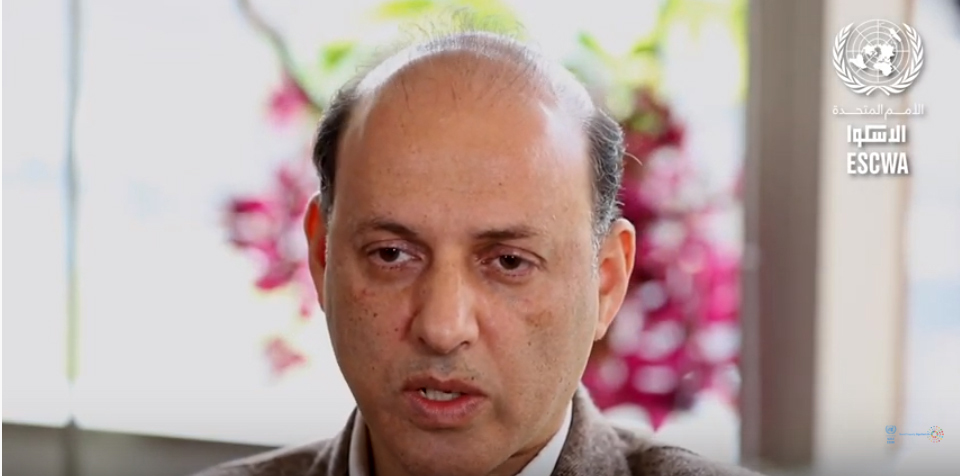
The Arab region is expected to be hard hit by the coronavirus crisis with rising poverty and food insecurity. Khalid Abu-Ismail outlines four policy responses.

Most read

Beyond job creation: how can Egypt’s gender gap in work be closed?

More than 2 million jobs are needed each year to absorb new entrants into Egypt’s labour market and raise the country’s employment rate. The job challenge is even more acute for women, whose labour force participation remains low despite recent gains in education. This column reports on the second Development Dialogue, an ERF–World Bank Group joint initiative, which brought together students, scholars, policy-makers and private sector leaders at the American University in Cairo to consider how the country’s gender gap in work can be closed.

Digitalisation, global value chains and regional integration in MENA & SSA

Participation in global value chains is vital for countries pursuing structural transformation and inclusive economic development. This column summarises new evidence on how much production processes have been globalised in Africa and the Middle East relative to other regions; whether this process has taken place with partners within or outside the region; and whether it has taken place more in manufacturing or services.

How trade policy can reduce MENA’s cereal import vulnerability

Heavy dependence on imported cereals, combined with climate change, water scarcity and geopolitical uncertainty, continues to threaten food resilience across MENA. This column explains how an inclusive trade policy can play a key role in making the region’s food security less vulnerable to shocks.

The political economy of algorithms in the Middle East

The Middle East is entering a new political-economic era – one in which algorithms, data and artificial intelligence may become as strategically important as oil once was. Across the region, governments are investing heavily in digital infrastructure, smart governance and AI-driven economic transformation. This column outlines how AI and algorithmic governance are reshaping power, inequality and state capacity in the region.

The risks of a two-speed AI economy in MENA

Much of the debate about artificial intelligence in the Middle East and North Africa focuses on how many jobs it will replace. As this column explains, the more important challenge is that the new technology is likely to create a two-speed labour market, where countries with the capacity to invest in digital infrastructure and skills move rapidly ahead while others struggle to keep pace. Unless governments combine credible national reforms with targeted regional cooperation, AI could widen, not reduce, the economic divides across MENA.

From mega-investment to mega-productivity: closing MENA’s conversion gap

Across the Middle East and North Africa, governments are investing heavily in infrastructure, technology, diversification and new industries. Yet capital accumulation alone does not guarantee productivity growth. As this column argues, the region’s deeper challenge is its ‘investment-to-productivity conversion gap’: ensuring that large-scale investment translates consistently into stronger firms, technological diffusion, skills and better jobs. A different metric of success is required: not how much capital is deployed, but how much productive capability that capital leaves behind.


Linkedin