

Economic Research Forum (ERF)

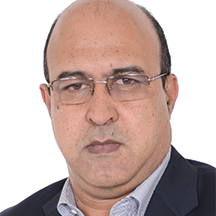
Sofiane Ghali

Author

Sofiane Ghali
Dean, Higher School of Economic and Commercial Sciences of Tunis, University of Tunis

Sofiane Ghali is the Dean of the higher School of Economic and Commercial Sciences of Tunis at University of Tunis. His research focuses on topics related to International Trade, Industrial Organization and Development and Economic Growth. He received his Ph.D in Economics Faculté des Sciences Economiques et de Gestion de Tunis at University of Tunis – El Manar, Tunisia. He is an ERF policy affiliate.

Content by this Author

Tunisia’s experiences with industrial policy and export diversification

What has been the role of industrial policy in Tunisia’s export diversification of the past 25 years? This column reports research evidence on the dynamics of diversification since 1995 for primary and resource-based products as well as manufactured products. The authors show that contrary to the conventional view that the country has achieved limited success in moving up the technological ladder in terms of the diversification and sophistication of its exports, there has been extensive progress.

Most read

Empowering Egypt’s young people for the future of work

Egypt’s most urgent priority is creating more and better jobs for its growing youth population. This column reports on the first Development Dialogue, an ERF–World Bank joint initiative, which brought together students, scholars, policy-makers and private sector leaders at Cairo University to confront the country’s labour market challenge. The conversation explored why youth inclusion matters, what the data show and how dialogue and the forthcoming Country Economic Memorandum can inform practical pathways to accelerate job creation.

Preparing youth for the workforce of the future

As economies undergo rapid digital and green transformations, young people face a growing mismatch between their skills and what the modern labour market needs. This column argues that enabling youth to compete in the workforce of the future requires systemic reforms in education, skills formation and labour market institutions, especially in developing economies.

Connectivity and conflict: understanding the risks of inequality in the Middle East

While high inequality does not always lead to conflict, new research reported in this column shows that widespread internet access acts as a catalyst, transforming economic grievances into political instability. For policy-makers in the Middle East and North Africa, this means that as digital connectivity expands, the security costs of ignoring economic disparities rise dramatically. The combination of idle youth, high inequality and high-speed internet is a volatile mix.

The political economy of stalled structural reforms in MENA

There is a persistent pattern to the structural reforms that are required to underpin economic progress in the countries of the Middle East and North Africa: ambitious strategies are announced and partially implemented, but ultimately they are diluted or reversed. This column argues that the repeated stalling of reform is not primarily a failure of economic design. Rather, it reflects deep-seated political economy constraints rooted in rent dependence, elite bargaining and weak institutional credibility. Without addressing these underlying dynamics, reform efforts are likely to remain symbolic rather than transformative.

Closing the gender gap in political participation in MENA

Women across the Middle East and North Africa participate less than men in politics – not only in political parties and elections, but also in petitions, boycotts, protests and strikes. This column reports evidence from ten countries showing that differences in education, employment and political attitudes explain part of this disparity, yet a significant gender gap remains.


Linkedin