

Economic Research Forum (ERF)

Phoebe W. Ishak

Author

Phoebe W. Ishak
Postdoctoral Researcher at Aix-Marseille School of Economics

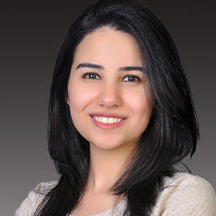
Phoebe Ishak is a postdoctoral researcher at Aix-Marseille School of Economics (AMSE). Prior to joining AMSE, She was a postdoc at Freie Universität Berlin and the John F. Kennedy Institute for North American Studies (JFKI). She holds a PhD in Economics from Universität Hamburg. Her primary research interests are Development Economics, Labor Economics, Gender and Political Economy. Her work is focused on the economies of developing countries especially in Africa, Latin America, and the MENA region. She has worked as a consultant for the United Nations ESCWA and IMF.

Content by this Author

Oil price shocks, protest and the shadow economy

Can negative oil price shocks raise the risk of internal conflict in oil-dependent economies? Not really: as this column reports, evidence from 144 countries over the period 1991-2015 indicates that the destructive effects are mitigated when informal activities are a bigger part of the whole economy. The results imply the helpful role of the shadow economy in keeping political systems stable under rising economic pressures.

Most read

Artificial intelligence and the renewable energy transition in MENA

Artificial intelligence has the potential to bridge the gap between abundant natural resources and the pressing need for reliable, sustainable power in the Middle East and North Africa. This column outlines the constraints and proposes policies that can address the challenges of variability of renewable resources and stress on power grids, and support the transformation of ‘sunlight’ to ‘smart power’.

Arab youth and the future of work

The Arab region’s labour markets are undergoing a triple transformation: demographic, digital and green. As this column explains, whether these forces evolve into engines of opportunity or drivers of exclusion for young people will hinge on how swiftly and coherently policy-makers can align education, technology and employment systems to foster adaptive skills, inclusive institutions and innovation-led pathways to decent work.

Digitalising governance in MENA: opportunities for social justice

Can digital governance promote social justice in MENA – or does it risk deepening inequality and exclusion? This column examines the evolution of digital governance in three sub-regions – Egypt, Jordan and the countries of the Gulf Cooperation Council – highlighting how data practices, transparency mechanisms and citizen trust shape the social outcomes of technological reform.

Wrong finance in a broken multilateral system: red flags from COP30-Belém

With the latest global summit on climate action recently wrapped up, ambitious COP pledges and initiatives continue to miss delivery due to inadequate commitments, weak operationalisation and unclear reporting systems. As this column reports, flows of climate finance remain skewed: loans over grants; climate mitigation more than climate adaptation; and weak accountability across mechanisms. Without grant-based finance, debt relief, climate-adjusted lending and predictable multilateral flows, implementation of promises will fail.

Why political connections are driving business confidence in MENA

This column reports the findings of a new study of how the political ties of firms in the Middle East and North Africa boost business confidence. The research suggests that this optimism is primarily driven by networked access to credit and lobbying, underscoring the need for greater transparency and institutional reform in corporate governance.


Linkedin