

Economic Research Forum (ERF)

Ashraf El-Araby

Author

Ashraf El-Araby
President, Institute of National Planning, Egypt

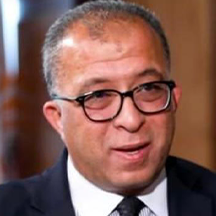
Professor Ashraf El-Araby is the President of Egypt’s Institute of National Planning and a former Minister of Planning and International Cooperation, where he also served as Egypt’s Governor to major international financial institutions. He is currently a Board Member of the Financial Regulatory Authority and Secretary-General of the Arab Society for Economic Research, among other national and regional roles. He holds a Ph.D. in Economics from Kansas State University (2004) and is widely recognized for his work on planning, macroeconomic policy, education economics, and labor markets. He is the chief editor of the ninth edition of the Arab Development Report (2025).

Content by this Author

Arab youth and the future of work

The Arab region’s labour markets are undergoing a triple transformation: demographic, digital and green. As this column explains, whether these forces evolve into engines of opportunity or drivers of exclusion for young people will hinge on how swiftly and coherently policy-makers can align education, technology and employment systems to foster adaptive skills, inclusive institutions and innovation-led pathways to decent work.

Most read

Untapped talent, unrealised growth: jobs and women in the MENAAP region

Only around one in five women of working age participate in the labour markets of the Middle East, North Africa, Afghanistan and Pakistan. As this column explains, the region can no longer afford to leave half its human capital underused. Expanding women’s labour force participation is central to growth and resilience in the face of looming demographic change.

Closing the gender gap in political participation in MENA

Women across the Middle East and North Africa participate less than men in politics – not only in political parties and elections, but also in petitions, boycotts, protests and strikes. This column reports evidence from ten countries showing that differences in education, employment and political attitudes explain part of this disparity, yet a significant gender gap remains.

Labour demand and informal employment in Egypt’s manufacturing sector

Egypt’s manufacturing sector faces a dual challenge of weak job creation and persistent informality. Drawing on survey evidence on business behaviour and labour market dynamics, this column explains why job creation is limited and informal work remains such an integral part of how firms organise production. The generation of more formal jobs requires a comprehensive policy approach, one that goes beyond enforcement of labour regulations to reshape the economic environment in which firms and workers make decisions.

Challenges of conflict and industrial policy for development

How effective is industrial policy as a tool for long-term economic growth and development? Against the backdrop of the conflict currently engulfing the Middle East, North Africa, Afghanistan and Pakistan (MENAAP), a new report argues that while industrial policies are widely used across the region, they can only address market failures and foster growth when they are aligned with country capabilities, implemented with accountability and backed by capable institutions.


Linkedin