

Economic Research Forum (ERF)

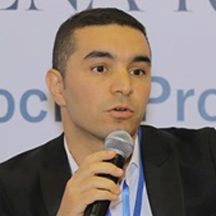
Walid Merouani

Author

Walid Merouani
Centre de Recherche en Economie Appliquée pour le Développement (ALGERIE)

Merouani is currently is a permanent researcher at the Center for Research in Applied Economic for Development where he is the head of the team working on ‘Economics of Social Security’. Merouani is also an associate researcher in the Centre for Research in Economic and Management (CREM-CNRS, France).

Content by this Author

Multidimensional poverty in Algeria

Measures of multidimensional poverty reflect a number of different kinds of deprivation: education; health; living conditions; employment; and financial inclusion. This column reports on recent data for Algeria.

The impact of mass media on voting: evidence from Algeria and Tunisia

What is the impact of mass media – TV, radio, newspapers, the internet and social media – on citizens’ intention to vote in elections? This column reports analysis of survey evidence from Algeria and Tunisia.

Social security for young workers in Arab countries

Social security coverage of young workers in Arab countries is low – in part because many are employed in informal jobs; and in part because they do not see the value of the system. This column reports survey evidence on young workers’ attitudes towards participation in both social security and politics. It also explores policy reforms that might make access to social security universal for young workers.

Most read

Arab youth and the future of work

The Arab region’s labour markets are undergoing a triple transformation: demographic, digital and green. As this column explains, whether these forces evolve into engines of opportunity or drivers of exclusion for young people will hinge on how swiftly and coherently policy-makers can align education, technology and employment systems to foster adaptive skills, inclusive institutions and innovation-led pathways to decent work.

Digitalising governance in MENA: opportunities for social justice

Can digital governance promote social justice in MENA – or does it risk deepening inequality and exclusion? This column examines the evolution of digital governance in three sub-regions – Egypt, Jordan and the countries of the Gulf Cooperation Council – highlighting how data practices, transparency mechanisms and citizen trust shape the social outcomes of technological reform.

Wrong finance in a broken multilateral system: red flags from COP30-Belém

With the latest global summit on climate action recently wrapped up, ambitious COP pledges and initiatives continue to miss delivery due to inadequate commitments, weak operationalisation and unclear reporting systems. As this column reports, flows of climate finance remain skewed: loans over grants; climate mitigation more than climate adaptation; and weak accountability across mechanisms. Without grant-based finance, debt relief, climate-adjusted lending and predictable multilateral flows, implementation of promises will fail.

Why political connections are driving business confidence in MENA

This column reports the findings of a new study of how the political ties of firms in the Middle East and North Africa boost business confidence. The research suggests that this optimism is primarily driven by networked access to credit and lobbying, underscoring the need for greater transparency and institutional reform in corporate governance.

Empowering Egypt’s young people for the future of work

Egypt’s most urgent priority is creating more and better jobs for its growing youth population. This column reports on the first Development Dialogue, an ERF–World Bank joint initiative, which brought together students, scholars, policy-makers and private sector leaders at Cairo University to confront the country’s labour market challenge. The conversation explored why youth inclusion matters, what the data show and how dialogue and the forthcoming Country Economic Memorandum can inform practical pathways to accelerate job creation.


Linkedin