

Economic Research Forum (ERF)

Youssouf Kiendrebeogo

Author

Youssouf Kiendrebeogo
The World Bank

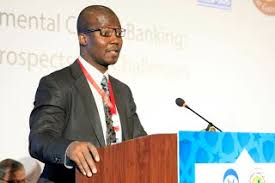
Youssouf Kiendrebeogo is an economist in the Chief Economist Office of the World Bank’s Middle East and North Africa region. He joined the Bank in 2014, after earning a PhD and an MS in Economics from the University of Auvergne (CERDI). His research focuses on open-economy macroeconomics, trade policy, financial development, growth and inequality.

Content by this Author

Financial vulnerability and export dynamics

How does the financial vulnerability of many developing economies affect the ability of their firms to participate effectively in export markets? This column summarises research on 34 developing countries between 1997 and 2011. Financial crises in both the exporting and importing countries have a big negative effect on export dynamics.

Most read

Untapped talent, unrealised growth: jobs and women in the MENAAP region

Only around one in five women of working age participate in the labour markets of the Middle East, North Africa, Afghanistan and Pakistan. As this column explains, the region can no longer afford to leave half its human capital underused. Expanding women’s labour force participation is central to growth and resilience in the face of looming demographic change.

Closing the gender gap in political participation in MENA

Women across the Middle East and North Africa participate less than men in politics – not only in political parties and elections, but also in petitions, boycotts, protests and strikes. This column reports evidence from ten countries showing that differences in education, employment and political attitudes explain part of this disparity, yet a significant gender gap remains.

Labour demand and informal employment in Egypt’s manufacturing sector

Egypt’s manufacturing sector faces a dual challenge of weak job creation and persistent informality. Drawing on survey evidence on business behaviour and labour market dynamics, this column explains why job creation is limited and informal work remains such an integral part of how firms organise production. The generation of more formal jobs requires a comprehensive policy approach, one that goes beyond enforcement of labour regulations to reshape the economic environment in which firms and workers make decisions.

Challenges of conflict and industrial policy for development

How effective is industrial policy as a tool for long-term economic growth and development? Against the backdrop of the conflict currently engulfing the Middle East, North Africa, Afghanistan and Pakistan (MENAAP), a new report argues that while industrial policies are widely used across the region, they can only address market failures and foster growth when they are aligned with country capabilities, implemented with accountability and backed by capable institutions.


Linkedin