

Economic Research Forum (ERF)

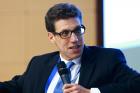
Sergio Schmukler

Author

Sergio Schmukler
Lead Economist at the World Bank’s Development Research Group

Sergio Schmukler is Lead Economist at the World Bank’s Development Research Group. His research area is international finance and international financial markets and institutions. He obtained his Ph.D. in Economics from the University of California at Berkeley

Content by this Author

Equity capital inflows, corporate finance and growth in emerging economies

Studies of the relationship between foreign investor participation in public equity markets and aggregate economic activity in emerging economies find strong effects on productivity, investment, economic growth and the price of publicly traded stocks – but it is not clear why. This VoxEU column shows that equity capital inflows increase the supply of funding available to firms in emerging economies, encouraging them to obtain more equity financing to invest and expand. Large firms benefit most from the inflows.

Capital raising in the Arab world

How do firms in Arab countries use equity, corporate bond and syndicated loan markets to obtain finance? This column reports research that provides a first documentation of issuance in domestic and international markets over a 25-year period from the early 1990s.

Most read

The green transition in MENA economies: challenges and policy pathways

The economies of the Middle East and North Africa are at a critical turning point. Global decarbonisation pressures, energy market volatility and technological transformation are increasingly challenging hydrocarbon-based growth models. This column argues that the green transition is not only an environmental necessity but also a strategic economic imperative.

Beyond job creation: how can Egypt’s gender gap in work be closed?

More than 2 million jobs are needed each year to absorb new entrants into Egypt’s labour market and raise the country’s employment rate. The job challenge is even more acute for women, whose labour force participation remains low despite recent gains in education. This column reports on the second Development Dialogue, an ERF–World Bank Group joint initiative, which brought together students, scholars, policy-makers and private sector leaders at the American University in Cairo to consider how the country’s gender gap in work can be closed.

The political economy of algorithms in the Middle East

The Middle East is entering a new political-economic era – one in which algorithms, data and artificial intelligence may become as strategically important as oil once was. Across the region, governments are investing heavily in digital infrastructure, smart governance and AI-driven economic transformation. This column outlines how AI and algorithmic governance are reshaping power, inequality and state capacity in the region.

Digitalisation, global value chains and regional integration in MENA & SSA

Participation in global value chains is vital for countries pursuing structural transformation and inclusive economic development. This column summarises new evidence on how much production processes have been globalised in Africa and the Middle East relative to other regions; whether this process has taken place with partners within or outside the region; and whether it has taken place more in manufacturing or services.

How trade policy can reduce MENA’s cereal import vulnerability

Heavy dependence on imported cereals, combined with climate change, water scarcity and geopolitical uncertainty, continues to threaten food resilience across MENA. This column explains how an inclusive trade policy can play a key role in making the region’s food security less vulnerable to shocks.


Linkedin