

Economic Research Forum (ERF)

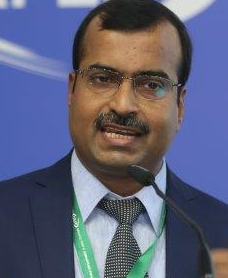
Niranjan Sarangi

Author

Niranjan Sarangi
First Economic Affairs Officer, ESCWA

Niranjan Sarangi is First Economic Affairs Officer in the Economic Development and Integration Division, UN-ESCWA. He is the lead author of the report Rethinking Fiscal Policy for the Arab Region. He is also one of the authors of several ESCWA flagship reports such as the Arab Middle Class (2014) and Arab Development Outlook: Vision 2030 (2015). Prior to joining ESCWA in 2013, he was an Economist with UNDP Asia-Pacific and co-authored three regional Asia-Pacific Human Development Reports. Niranjan holds a PhD in Development Economics from Jawaharlal Nehru University, Delhi, India.

Content by this Author

Fiscal policy to help escape MENA’s low productivity trap

Many countries in the Middle East and North Africa are locked in a ‘low productivity trap’ despite shifts in employment towards non-farm and non-oil sectors . This column makes the case for transformational changes in the macro-fiscal policy orientation to generate millions of new job opportunities for the growing educated youth and to improve the labour share of income to reduce poverty.

Tax reform for equity and fiscal space in middle-income Arab countries

Arab countries have systematically low tax collection rates relative to the size of their economies. What’s more, with rising military expenditures and lower oil prices, the public budgets of the oil-rich states are coming under growing pressure. This column argues that the time is right for region-wide fiscal policy reforms that enact fair and progressive taxation systems.

Most read

Untapped talent, unrealised growth: jobs and women in the MENAAP region

Only around one in five women of working age participate in the labour markets of the Middle East, North Africa, Afghanistan and Pakistan. As this column explains, the region can no longer afford to leave half its human capital underused. Expanding women’s labour force participation is central to growth and resilience in the face of looming demographic change.

Labour demand and informal employment in Egypt’s manufacturing sector

Egypt’s manufacturing sector faces a dual challenge of weak job creation and persistent informality. Drawing on survey evidence on business behaviour and labour market dynamics, this column explains why job creation is limited and informal work remains such an integral part of how firms organise production. The generation of more formal jobs requires a comprehensive policy approach, one that goes beyond enforcement of labour regulations to reshape the economic environment in which firms and workers make decisions.

Challenges of conflict and industrial policy for development

How effective is industrial policy as a tool for long-term economic growth and development? Against the backdrop of the conflict currently engulfing the Middle East, North Africa, Afghanistan and Pakistan (MENAAP), a new report argues that while industrial policies are widely used across the region, they can only address market failures and foster growth when they are aligned with country capabilities, implemented with accountability and backed by capable institutions.


Linkedin