

Economic Research Forum (ERF)

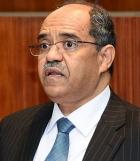
Mohammed Laksaci

Author

Mohammed Laksaci
Former governor, Bank of Algeria

Mohammed Laksaci graduated from Algiers's Ecole Superieure de Commerce in 1978 with a bachelor degree in finance. He holds a bachelorís and a masterís degree in economics from the Catholic University of Louvain (UCL, Belgium). In 1985, he received his PhD in economics from UCLouvain, where he also worked as a teaching assistant from 1982 to 1985 in charge of the Monetary Theory course. From 1986 to 1990, he was a lecturer at Algiersís Ecole Superieure de Commerce and president of its scientific council. From 2001 to 2016, he was Governor at the International Monetary Fund for Algeria, and a member of its international monetary and financial committee representing a group of six countries : Afghanistan, Algeria, Ghana, Iran, Morocco and Tunisia. During that period, he also served as Vice-Governor at the Arab Monetary Fund. Laksaci was nominated president of the Association of African Central Banks twice. Since November 2016, he is a visiting lecturer at Ecole Superieure de Commerce, dispensing courses for PhD students.

Content by this Author

Rethinking the macroeconomics of resource-rich countries

After years of high commodity prices, a new era of lower prices, especially for oil, will be challenging for resource-rich countries, which must cope with the decline in income and the potential widening of internal and external imbalances. This column summarises a recent eBook in which leading economists examine the shifting landscape in commodity markets and explore the exchange rate, monetary and fiscal policy options, as well as the role of finance, including sovereign wealth funds and diversification.

Most read

The political economy of stalled structural reforms in MENA

There is a persistent pattern to the structural reforms that are required to underpin economic progress in the countries of the Middle East and North Africa: ambitious strategies are announced and partially implemented, but ultimately they are diluted or reversed. This column argues that the repeated stalling of reform is not primarily a failure of economic design. Rather, it reflects deep-seated political economy constraints rooted in rent dependence, elite bargaining and weak institutional credibility. Without addressing these underlying dynamics, reform efforts are likely to remain symbolic rather than transformative.

Untapped talent, unrealised growth: jobs and women in the MENAAP region

Only around one in five women of working age participate in the labour markets of the Middle East, North Africa, Afghanistan and Pakistan. As this column explains, the region can no longer afford to leave half its human capital underused. Expanding women’s labour force participation is central to growth and resilience in the face of looming demographic change.

Closing the gender gap in political participation in MENA

Women across the Middle East and North Africa participate less than men in politics – not only in political parties and elections, but also in petitions, boycotts, protests and strikes. This column reports evidence from ten countries showing that differences in education, employment and political attitudes explain part of this disparity, yet a significant gender gap remains.

Labour demand and informal employment in Egypt’s manufacturing sector

Egypt’s manufacturing sector faces a dual challenge of weak job creation and persistent informality. Drawing on survey evidence on business behaviour and labour market dynamics, this column explains why job creation is limited and informal work remains such an integral part of how firms organise production. The generation of more formal jobs requires a comprehensive policy approach, one that goes beyond enforcement of labour regulations to reshape the economic environment in which firms and workers make decisions.


Linkedin