

Economic Research Forum (ERF)

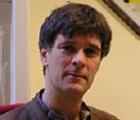
Frederick van der Ploeg

Author

Frederick van der Ploeg
Professor of Economics and Research Director of OxCarre, University of Oxford

Professor of Economics at the University of Oxford, having previously been an academic at the University of Cambridge (1977-1983), London School of Economics (1983-1988), Tilburg University (1985-1991) and the European University Institute, Florence (1988, 2003-7), a Chief Financial Spokesperson in the Dutch Parliament (1994-98), a State Secretary for Education, Culture and Science (1998-2002) and an elected member of the UNESCO World Heritage Committee (2003-7). Currently, also affiliated with CEPR, CESifo, Oxcarre, Netspar, VU University of Amsterdam, and the Tinbergen Institute. Although most of his work has been on macroeconomics and public finance, he currently works on the economics of natural resources with side interests in higher education reform and economics of art and culture. He earned his Ph.D. in Engineering from the University of Cambridge and is editor of the Basil Blackwell Handbook of International Macroecomics, co-author of the OUP textbook Foundations of Modern Macroeconomics, and author of numerous articles in academic journals and the popular press.

Content by this Author

Rethinking the macroeconomics of resource-rich countries

After years of high commodity prices, a new era of lower prices, especially for oil, will be challenging for resource-rich countries, which must cope with the decline in income and the potential widening of internal and external imbalances. This column summarises a recent eBook in which leading economists examine the shifting landscape in commodity markets and explore the exchange rate, monetary and fiscal policy options, as well as the role of finance, including sovereign wealth funds and diversification.

Most read

Labour demand and informal employment in Egypt’s manufacturing sector

Egypt’s manufacturing sector faces a dual challenge of weak job creation and persistent informality. Drawing on survey evidence on business behaviour and labour market dynamics, this column explains why job creation is limited and informal work remains such an integral part of how firms organise production. The generation of more formal jobs requires a comprehensive policy approach, one that goes beyond enforcement of labour regulations to reshape the economic environment in which firms and workers make decisions.

Challenges of conflict and industrial policy for development

How effective is industrial policy as a tool for long-term economic growth and development? Against the backdrop of the conflict currently engulfing the Middle East, North Africa, Afghanistan and Pakistan (MENAAP), a new report argues that while industrial policies are widely used across the region, they can only address market failures and foster growth when they are aligned with country capabilities, implemented with accountability and backed by capable institutions.

The green transition in MENA economies: challenges and policy pathways

The economies of the Middle East and North Africa are at a critical turning point. Global decarbonisation pressures, energy market volatility and technological transformation are increasingly challenging hydrocarbon-based growth models. This column argues that the green transition is not only an environmental necessity but also a strategic economic imperative.


Linkedin