

Economic Research Forum (ERF)

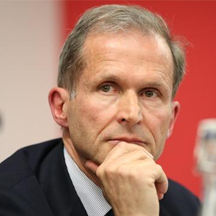
Erik Berglof

Founding contributors

Erik Berglof
Chief Economist, Asian Infrastructure Investment Bank

Erik Berglof is a Chief Economist at the Asian Infrastructure Investment Bank; Previously, he was a Professor and a Director at the Institute of Global Affairs, LSE and a Chief Economist at the EBRD.

Content by this Author

How developing countries can reach net zero

To phase out fossil fuels, the global shift to renewables must be just. As this Project Syndicate column argues, to reach carbon neutrality, the international community must provide developing countries with a positive vision and ensure that the shift to renewable energy creates shared prosperity.

Most read

Challenges of conflict and industrial policy for development

How effective is industrial policy as a tool for long-term economic growth and development? Against the backdrop of the conflict currently engulfing the Middle East, North Africa, Afghanistan and Pakistan (MENAAP), a new report argues that while industrial policies are widely used across the region, they can only address market failures and foster growth when they are aligned with country capabilities, implemented with accountability and backed by capable institutions.

The green transition in MENA economies: challenges and policy pathways

The economies of the Middle East and North Africa are at a critical turning point. Global decarbonisation pressures, energy market volatility and technological transformation are increasingly challenging hydrocarbon-based growth models. This column argues that the green transition is not only an environmental necessity but also a strategic economic imperative.

Beyond job creation: how can Egypt’s gender gap in work be closed?

More than 2 million jobs are needed each year to absorb new entrants into Egypt’s labour market and raise the country’s employment rate. The job challenge is even more acute for women, whose labour force participation remains low despite recent gains in education. This column reports on the second Development Dialogue, an ERF–World Bank Group joint initiative, which brought together students, scholars, policy-makers and private sector leaders at the American University in Cairo to consider how the country’s gender gap in work can be closed.

The political economy of algorithms in the Middle East

The Middle East is entering a new political-economic era – one in which algorithms, data and artificial intelligence may become as strategically important as oil once was. Across the region, governments are investing heavily in digital infrastructure, smart governance and AI-driven economic transformation. This column outlines how AI and algorithmic governance are reshaping power, inequality and state capacity in the region.


Linkedin