

Economic Research Forum (ERF)

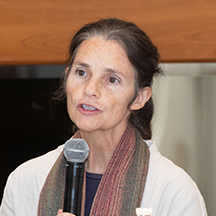
Sabina Alkire

Author

Sabina Alkire
Professor of Poverty and Human Development and Directs Oxford Poverty and Human Development Initiative

Sabina Alkire is the Professor of Poverty and Human Development and directs the Oxford Poverty and Human Development Initiative (OPHI) at the University of Oxford. Previously, she worked at the George Washington University, Harvard University, the Human Security Commission, and the World Bank. She has a DPhil in Economics from the University of Oxford. Together with Professor James Foster, Sabina developed the Alkire-Foster (AF) method for measuring multidimensional poverty, a flexible technique that can incorporate different dimensions, or aspects of poverty, to create measures tailored to each context. With colleagues at OPHI this has been applied and implemented empirically to produce a Multidimensional Poverty Index (MPI). The MPI offers a tool to identify who is poor by considering the range of deprivations they suffer. It is used to report a headline figure of poverty (the MPI), which can be unpacked to provide a detailed information platform for policy design showing how people are poor nationally, and how they are poor by areas, groups, and by each indicator.

Content by this Author

Fighting poverty: innovative policy lessons from the second Arab Multidimensional Poverty Report

Poverty is a complex and multidimensional policy challenge. Understanding the interconnected causes and effects of poverty is a critical first step for policy-makers trying to improve people’s lives. This column presents an updated model for measuring deprivation levels in the Arab region, and proposes a series of policy suggestions to improve economic and social outcomes. Put simply, any reforms in the region should be based on a joined-up policy approach, built on an understanding of the interplay between different aspects of poverty and inequality.

Most read

Artificial intelligence and the renewable energy transition in MENA

Artificial intelligence has the potential to bridge the gap between abundant natural resources and the pressing need for reliable, sustainable power in the Middle East and North Africa. This column outlines the constraints and proposes policies that can address the challenges of variability of renewable resources and stress on power grids, and support the transformation of ‘sunlight’ to ‘smart power’.

Arab youth and the future of work

The Arab region’s labour markets are undergoing a triple transformation: demographic, digital and green. As this column explains, whether these forces evolve into engines of opportunity or drivers of exclusion for young people will hinge on how swiftly and coherently policy-makers can align education, technology and employment systems to foster adaptive skills, inclusive institutions and innovation-led pathways to decent work.

Digitalising governance in MENA: opportunities for social justice

Can digital governance promote social justice in MENA – or does it risk deepening inequality and exclusion? This column examines the evolution of digital governance in three sub-regions – Egypt, Jordan and the countries of the Gulf Cooperation Council – highlighting how data practices, transparency mechanisms and citizen trust shape the social outcomes of technological reform.

Wrong finance in a broken multilateral system: red flags from COP30-Belém

With the latest global summit on climate action recently wrapped up, ambitious COP pledges and initiatives continue to miss delivery due to inadequate commitments, weak operationalisation and unclear reporting systems. As this column reports, flows of climate finance remain skewed: loans over grants; climate mitigation more than climate adaptation; and weak accountability across mechanisms. Without grant-based finance, debt relief, climate-adjusted lending and predictable multilateral flows, implementation of promises will fail.

Why political connections are driving business confidence in MENA

This column reports the findings of a new study of how the political ties of firms in the Middle East and North Africa boost business confidence. The research suggests that this optimism is primarily driven by networked access to credit and lobbying, underscoring the need for greater transparency and institutional reform in corporate governance.


Linkedin